Halftone Project: Marrying Vintage Print Charm with Digital Design Impact
In a digital landscape saturated with clean lines and sterile vectors, there's a powerful counter-movement seeking texture, history, and authenticity. Designers are increasingly looking back to move forward, drawing inspiration from analog techniques to create visuals that feel grounded and soulful. This is the exact space where the Halftone Project typeface makes its mark. It is not merely a font but a design tool that encapsulates a specific aesthetic philosophy, offering creatives a direct path to creating bold, impactful statements that resonate with a sense of tangible history.
Understanding the Halftone Project Typeface
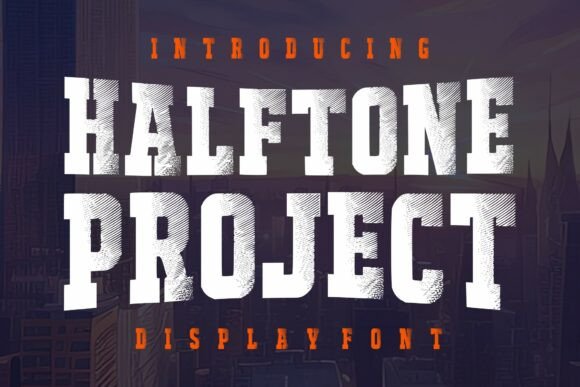
At its core, Halftone Project is a bold, vintage display font built upon the sturdy foundations of slab serif typography. Think of the strong, blocky serifs found in classic industrial or sports lettering. What sets it apart is its innovative execution: these robust letterforms are filled with a gradient of dots, meticulously designed to simulate the halftone printing technique. This method, once a necessity in newspapers and comics to reproduce shades of gray with a single color of ink, is now a celebrated visual effect. The font brings this classic retro-industrial feel into the modern era, making it perfect for eye-catching headlines where impact is non-negotiable.
The relevance of Halftone Project lies in its ability to bridge two worlds. It satisfies the contemporary demand for designs that tell a story and have a distinct "analog soul." For brands and creators, this means using this typeface instantly communicates a certain vibe—one that is bold, nostalgic, and intentionally crafted. It speaks to a growing appreciation for processes that have a history, moving away from the sometimes impersonal nature of purely digital creation.
Why Textured Typography is Gaining Traction
The rise of textured typefaces like Halftone Project is a direct response to several evolving trends in design and consumer behavior. Firstly, there is the enduring "lo-fi" aesthetic. In an age of high-definition screens and flawless renders, there's a charming appeal to visuals that embrace imperfection and the marks of creation. The dot pattern within Halftone Project is a controlled, designed imperfection that adds depth and character, making digital layouts feel more tangible and human.
Secondly, the font aligns with the resurgence of vintage and retro themes. From fashion to interior design, cycles of nostalgia influence visual culture. Halftone Project provides a ready-made solution for sports branding, university merchandise, or any project aiming to evoke a sense of heritage and timelessness. Its design is inherently reminiscent of old athletic posters, classic movie title cards, and bold advertisement layouts, allowing designers to tap into that rich visual history without resorting to clichés.
Finally, in a crowded content environment, standing out is paramount. A simple sans-serif or serif font can get lost. A typeface with the inherent texture and scale of Halftone Project demands attention. It works best at large scales, where its intricate dot patterns can be fully appreciated, making it the ultimate choice for projects that need to make a powerful visual statement from a distance—like a poster, a storefront logo, or a social media graphic in a fast-scrolling feed.
Practical Applications and Design Implications
For creatives, understanding how to leverage a font like Halftone Project is key. Its strength is in display use; it is not designed for body text. Its intricate details would become noise at small sizes. Therefore, its primary role is in headlines, logos, and featured text where it can be the focal point.
A critical practical tip is to pair it with simplicity. To let its complex texture take center stage, place Halftone Project against clean, uncluttered backgrounds. A solid color, a subtle gradient, or a minimalist image allows the font's unique character to shine without visual competition. This contrast is what creates maximum impact.
Its applications are diverse and span multiple industries:
- Branding & Logo Design: Ideal for companies in the craft brewing, outdoor apparel, collegiate, or vintage-inspired product spaces. A logo set in Halftone Project immediately conveys a brand identity that is bold, authentic, and has a story to tell.
- Poster & Editorial Design: Perfect for event posters, magazine headlines, or book covers aiming for a retro, athletic, or gritty aesthetic. The font adds a layer of visual interest that plain text cannot achieve.
- Merchandise & Packaging: On t-shirts, hats, or product packaging, the halftone texture translates exceptionally well, often adding a tactile quality to the printed item. It feels substantial and premium.
- Digital & Social Media: In a social media graphic or a website hero banner, Halftone Project stops the scroll. It provides the depth and visual weight needed to compete in a fast-paced digital environment.
Evolving Beyond a Single Font: A Creative Tool
Thinking of Halftone Project merely as a typeface underestimates its utility. It is better viewed as a specialized creative tool designed for a specific purpose: to create powerful visual statements with a built-in sense of history. Its design evolution reflects a broader shift in design tools—they are becoming more thematic and context-aware. Instead of just offering a new shape, fonts like this offer an entire mood and narrative.
For the modern workflow, this means efficiency. A designer can select Halftone Project and immediately establish a strong stylistic direction, saving time that might otherwise be spent on additional texturing or effects. It streamlines the process of achieving a complex, layered look.
However, its use requires thoughtful consideration. The bold, textured nature of the font means it carries a strong personality. It is best suited for projects that align with its vintage, industrial, or athletic character. Using it for a corporate financial report would likely be a mismatch, but using it for a local sports team's branding or a limited-edition product drop could be perfect.
In conclusion, the Halftone Project typeface is more than a nostalgic novelty. It is a thoughtfully designed response to a genuine need in contemporary design for tools that convey authenticity, depth, and impact. By understanding its strengths—its ideal use at scale, its pairing with clean spaces, and its specific thematic applications—creatives, marketers, and business owners can harness its power to produce work that is not only visually striking but also rich with character and story. It demonstrates how looking back at the techniques of the past can provide the most forward-looking solutions for today's design challenges.