Five Years Old: A Designer's Guide to Using This Playful Font Effectively
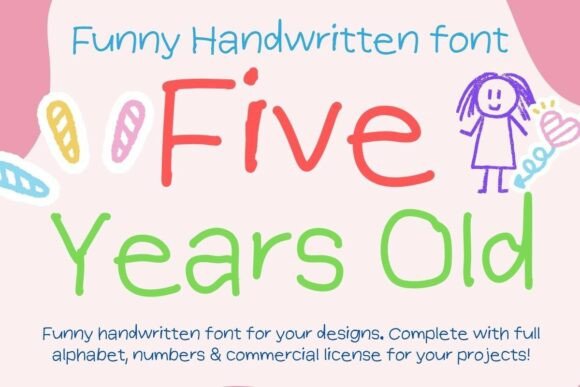
There's an undeniable charm to the Five Years Old font. It captures the unbridled energy and innocent creativity of childhood, making it a tempting choice for a wide array of projects. For designers, marketers, and creators, this cute handwritten font promises to inject a dose of whimsy and fun. Its bold, adventurous strokes are perfect for grabbing attention, especially when your target audience includes parents, educators, or anyone fondly reminiscing about their younger days. However, the very quality that makes it so appealing—its distinct, childlike personality—is also what makes it a potential pitfall for the unprepared.
Choosing a typeface is never just about aesthetics; it's about communication. A font speaks volumes before a single word is read. The Five Years Old font shouts "playful," "creative," and "youthful." This is fantastic for a preschool's branding, a kid's birthday invitation, or a craft blog header. But using it for a law firm's website or a corporate annual report would be a catastrophic mismatch. The first, and most critical, mistake is failing to align the font's voice with your project's message. It's not a universal solution; it's a specialized tool. Before you even think about downloading, ask yourself: does "playful and adventurous" accurately describe my brand or the specific message I'm trying to convey?
Avoiding the Pitfalls: Common Mistakes with the Five Years Old Font
Many creators, excited by its charm, rush into using this preschool font without considering the practicalities of design and readability. This can lead to projects that look amateurish or, worse, fail to communicate their message effectively. Let's explore some common errors and how to sidestep them.
The Readability Trap
The most frequent oversight is prioritizing style over substance. The Five Years Old font, with its irregular lines and playful character, is not designed for long-form body text. Imagine trying to read a full paragraph in this style; your eyes would quickly fatigue, and the message would be lost in the struggle to decipher the letters. A better approach is to use it strategically for high-impact, low-volume text. Think headlines, titles, short quotes, or call-to-action buttons. For the main content, pair it with a clean, highly legible sans-serif or serif font. This creates a dynamic contrast that highlights the playful element of your headline while ensuring the bulk of your information remains easy to digest.
Context is Everything
Another common misunderstanding is applying this children's font in inappropriate contexts. Its charm can quickly become a liability. For instance, using it for a serious announcement, a product warning label, or a formal invitation would send mixed signals and undermine your credibility. The font's personality is so strong that it can overpower a message it's not suited for. The corrective approach here is simple: always consider the emotional and professional context. A cute font like this is ideal for a bakery's menu, a daycare's signage, or a children's book title. It would be out of place, however, on a financial advisory brochure or a medical clinic's patient forms. Always ask, "Does this font respect the gravity and purpose of my message?"
Overuse and Visual Clutter
Enthusiasm for a new design asset can lead to overuse. Sprinkling the Five Years Old font across every element of a design—headers, sub-headers, body text, and captions—creates visual chaos. The uniqueness that made it appealing becomes overwhelming and distracting. This dilutes its impact and makes the entire layout feel cluttered and unprofessional. A more sophisticated method is to use it as an accent. Let it shine in one or two key areas, such as the main title and a logo, and use more neutral fonts for everything else. This allows its playful character to stand out and make a statement without dominating the entire design.
Practical Advice for Flawless Implementation
So, how do you harness the irresistible charm of the Five Years Old font without falling into these traps? It comes down to thoughtful application and a keen eye for detail.
First, always test for legibility at the intended size. A font that looks delightful on your large monitor might become an unreadable scrawl when printed on a small business card or viewed on a mobile device. Create a mock-up and view it in context. Can you easily read the words from a typical viewing distance? If not, consider increasing the size, adding more letter-spacing, or limiting its use to even larger display text.
Second, master the art of font pairing. The Five Years Old font works best when it has a quiet, reliable partner. A simple, geometric sans-serif like Poppins or a classic, clean serif like Lora can provide a stable foundation. The contrast between the structured partner font and the free-spirited cute handwritten font creates a balanced and professional-looking hierarchy. Avoid pairing it with other highly decorative or script fonts, as they will compete for attention and create a confusing visual mess.
Third, consider the color and background. This font often has a hand-drawn, textured quality. Placing it on a busy, patterned background can make it disappear. For maximum impact, use it on a simple, solid-colored background that provides enough contrast. A bright, cheerful color palette can enhance its playful vibe, but ensure the text remains the focal point.
What to Check Before You Commit
Before you finalize your design with the Five Years Old font, run through this quick checklist to ensure you're making a sound decision:
- Audience Alignment: Does your target audience genuinely respond to a playful, youthful aesthetic? If your brand is built on sophistication or minimalism, this may not be the right fit.
- Project Scope: Are you using it for short, impactful text elements? If you need it for paragraphs of text, you should look for a more legible alternative.
- Professional Context: Is the tone of your project lighthearted and fun? Using it for serious or formal content will likely appear unprofessional.
- Technical Quality: If you are purchasing or downloading this font, ensure it comes from a reputable source. A high-quality font file will include a full character set, proper kerning (the spacing between letters), and multiple file formats for compatibility. A poorly made font can have jagged edges or inconsistent spacing, making it look cheap.
- Licensing: Always verify the font's license. Can you use it for commercial projects? Are there restrictions? Respecting the designer's work is crucial for any professional creator.
The Five Years Old