Pansy: Evaluating a Handwritten Font for Digital and Print Projects
In the crowded market of digital assets, finding a typeface that conveys warmth and personality without sacrificing clarity can be a challenge. Pansy is a handwritten display font designed to bridge that gap, offering a sweet and friendly aesthetic. While there are countless script fonts available, Pansy distinguishes itself through a specific balance of playfulness and legibility. For professionals and creators, the decision to use a font like Pansy is not merely about decoration; it is about strategic communication. This analysis explores the practical applications, strengths, and limitations of the Pansy font to help you determine if it aligns with your creative workflow.
Core Characteristics and Visual Identity
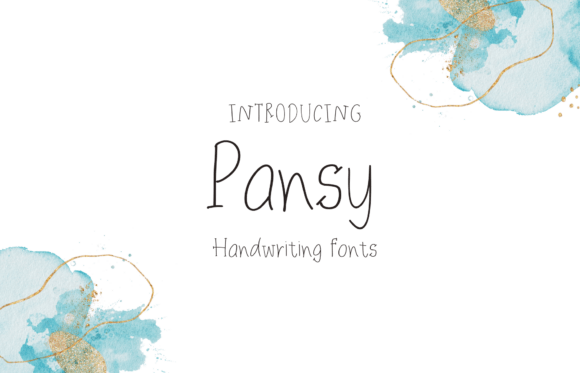
The defining feature of Pansy is its "sweet and friendly" visual tone. It avoids the aggressive loops often found in formal calligraphy or the jagged edges of grunge typography. Instead, it presents a clean, rounded structure that mimics natural handwriting. This makes it an effective choice for projects requiring a human touch. Unlike rigid serif or sans-serif fonts, Pansy introduces an organic element that can soften corporate communications or add charm to personal projects.
As a display font, Pansy is engineered for impact rather than body text. Its x-height and character spacing are optimized for headers, titles, and short bursts of text. The font maintains a consistent baseline, which is a common struggle with handwritten styles. This consistency ensures that the text remains readable even when used in dynamic layouts, such as comic book style lettering or game online interfaces. The visual weight is generally medium, allowing it to stand out against complex backgrounds without overwhelming the composition.
Practical Applications for Educators and Students
One of the most compelling use cases for Pansy is within educational settings. Teachers often require fonts that are engaging for young readers yet structured enough to serve as models for handwriting practice. Pansy fits this niche well. Its clear letterforms make it suitable for creating worksheets, classroom decorations, and interactive learning materials.
- Classroom Materials: Teachers can use Pansy for headings on bulletin boards or name tags, creating a welcoming environment.
- Student Projects: For students, particularly in younger grades, Pansy offers a way to add personality to presentations or reports while maintaining a polished look.
- Digital Learning: In the context of e-learning modules, the font helps reduce the sterile feel of digital education, making content feel more approachable.
The font’s legibility at various sizes is a critical factor here. If a font is too decorative, it becomes a hindrance to learning; Pansy strikes a balance that supports educational objectives without causing visual fatigue.
Integration in Commercial Design and Marketing
For freelancers, marketers, and small business owners, the utility of a font often comes down to its versatility across different media. Pansy demonstrates significant flexibility in commercial applications, particularly where the goal is to establish a friendly rapport with the audience.
Branding and Merchandise
In the realm of physical products, such as a love shirt or novelty merchandise, Pansy works exceptionally well. Its casual vibe aligns with the informal nature of apparel design. Similarly, for posters or flyers promoting community events, farmers markets, or local workshops, the font conveys accessibility. It suggests that the brand or event is approachable and community-oriented.
Digital Marketing and Social Media
Digital creators and bloggers can leverage Pansy for digital design assets. It performs effectively as a watermark for photography or as a header font for lifestyle blogs. The font’s friendly nature makes it suitable for calls-to-action (CTAs) where a hard-sell approach would be inappropriate. For instance, a non-profit organization asking for donations might use Pansy to soften the request and emphasize the human element of their cause.
Event Stationery
Writing wedding invitation suites or party cards is another strong application. While formal black-tie events might require traditional scripts, modern, rustic, or casual celebrations benefit from the warmth of Pansy. It mimics the look of hand-lettering, which adds a bespoke quality to printed stationery. However, it is important to consider the weight of the paper and the printing method; intricate handwritten fonts can sometimes lose definition on highly textured cardstock.
Technical Performance and Usability
When evaluating a font for professional use, aesthetic appeal must be weighed against technical performance. Pansy is designed as a display font, which implies specific technical constraints. It is generally optimized for larger point sizes. Using it for body text (e.g., 10pt or 12pt) is not recommended, as the fine details that give it character may become muddy or illegible on lower-resolution screens.
Regarding file formats and compatibility, most modern font distributions of Pansy include TTF (TrueType Font) and OTF (OpenType Font) files, ensuring compatibility with major operating systems like Windows and macOS. This broad compatibility is essential for collaborative projects where files are shared between designers and clients.
- Scalability: The vector-based nature of the font ensures it scales well for large format printing, such as banners or movie titles.
- Rendering: On web platforms, rendering quality depends on the browser, but generally, rounded handwritten fonts like Pansy perform well on modern displays.
- Character Set: Check the specific distribution for the extent of the character set. A robust version should include standard punctuation, numerals, and potentially multilingual support.
Strategic Limitations and Considerations
No asset is perfect for every scenario, and understanding the limitations of Pansy is as important as knowing its strengths. The primary limitation is its classification as a "cute" or "fun" font. In contexts requiring high authority, gravitas, or severe minimalism, Pansy would be inappropriate. For example, legal documents, financial reports, or luxury brand marketing targeting high-net-worth individuals would likely clash with the font’s friendly aesthetic.
Furthermore, overuse of handwritten fonts can lead to a dated look if not paired carefully with complementary typefaces. A best practice when using Pansy is to pair it with a clean, neutral sans-serif font (like Open Sans or Roboto) for body text. This contrast allows the personality of Pansy to shine in headers without sacrificing the readability of the main content.
Another consideration is the "trend" factor. While handwritten fonts are perennial favorites, specific styles can cycle in and out of fashion. Pansy’s rounded, friendly style is relatively timeless compared to more aggressive brush scripts, but it is still worth considering the long-term shelf life of your design. For a movie title or a permanent logo, ensure the style aligns with the brand's long-term vision rather than just current trends.
Conclusion: Is Pansy the Right Choice?
Pansy is a specialized tool in the typographic toolkit. It is not a workhorse font for long-form reading, nor is it a neutral vessel for data-heavy infographics. Its value lies in its ability to inject personality and warmth into a design. For teachers looking to make learning materials more engaging, or for small business owners aiming to humanize their brand, Pansy offers a reliable solution.
If your project requires a fun touch—whether for a craft project, a presentation, or game online assets—Pansy is a viable candidate. Its effectiveness relies on correct application: using it at appropriate sizes, in the right context, and paired with contrasting typography. By respecting its design intent, you can leverage Pansy to create designs that are not only visually appealing but also communicatively effective.