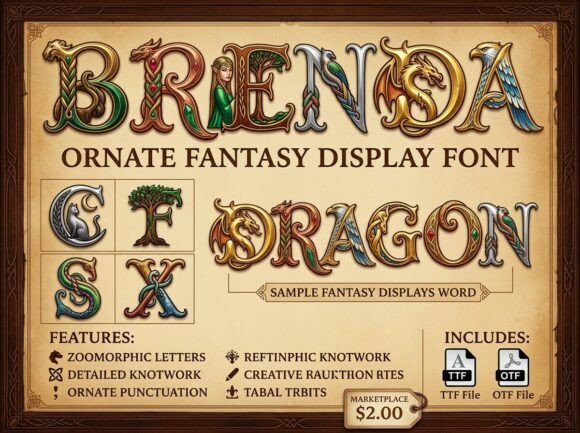
Integrating Brenda: A Practical Guide to Using a Decorative Display Font
In the world of digital design and branding, typography is often the silent workhorse, but occasionally a tool emerges that demands to be the lead singer. Brenda is one such asset. It is not merely a typeface; it is a high-impact decorative display font designed to command attention. Characterized by unique artistic elements, intricate details, and a strong visual personality, Brenda breaks away from the ordinary sans-serifs and serifs that dominate standard document layouts. However, for professionals and creators, understanding how to integrate such a distinct element into a structured workflow is just as important as the aesthetic appeal.
This article explores the practical application of Brenda. We will move beyond the visual description to analyze where this font fits in your project lifecycle, how it interacts with other design assets, and the specific workflows that benefit most from its unique character.
Understanding the Role of a Display Font
Before implementing Brenda, it is crucial to understand the difference between a body font and a display font. Standard workflow documents, emails, and long-form reading materials require high legibility at small sizes. Brenda, conversely, is designed for high-impact scenarios. Its intricate letterforms are optimized for large sizes where the typography needs to do the talking.
Think of Brenda as a specialized tool in your kit. You would not use a sledgehammer to hang a picture frame, nor would you use a delicate brush to demolish a wall. Brenda fits into the "statement" phase of your creative process. It is the element that provides the "instant wow factor," making it ideal for the initial visual hook that draws an audience into your content.
Strategic Implementation: Where Brenda Fits in Your Workflow
Integrating a decorative font requires planning. Because of its bold personality, Brenda should be introduced early in the conceptual phase of a project but deployed with precision during execution.
1. The Discovery and Branding Phase
For entrepreneurs and small business owners, the selection of typography is a foundational decision. If your brand identity is meant to be modern, artistic, or edgy, Brenda can serve as the primary logotype or wordmark.
- Logo Design: Use Brenda to build a unique identity for creative businesses. Its polished finish ensures that while the design is artistic, it remains professional.
- Style Guides: When creating your brand style guide, pair Brenda with a neutral, clean font for body text. This contrast ensures readability while maintaining the brand's unique voice.
2. The Production and Marketing Phase
Once the brand or project direction is set, Brenda moves into the production phase. This is where the font interacts with other assets like photography, illustration, and layout grids.
- Social Media Content: Algorithms favor engagement, and distinct visuals stop the scroll. Use Brenda for quotes, announcements, and headers in your social media graphics to ensure they stand out in a crowded feed.
- Packaging Design: Physical products require shelf presence. Brenda adds a premium, artistic feel to packaging, helping products stand out against competitors using generic typography.
Specific Use Cases and Execution
The versatility of Brenda allows it to adapt to various mediums. Here is how to practically apply it across different sectors of a creative or business workflow.
Poster and Event Design
In the context of event planning, the visual hierarchy of a poster is critical. The viewer needs to know "What" and "When" immediately. Use Brenda for the main headline—the name of the event or the central theme. Its intricate details catch the eye, while a simpler font can be used for the logistical details (date, time, location). This creates a natural reading flow, guiding the user from the aesthetic hook to the informational details.
Apparel and Merchandise
For those in the fashion or merch sector, the design process often involves translating a 2D concept onto a 3D surface. Brenda is particularly effective for T-shirts, hoodies, and tote bags. Because it is designed to be the center of attention, it works well as a standalone graphic element. When preparing files for print, ensure the font is outlined or rasterized correctly to maintain the integrity of the letterforms during the production process.
Music and Entertainment
Album covers and flyers rely heavily on mood. The "visual personality" of Brenda aligns perfectly with the music industry, where branding needs to be as expressive as the audio. It is ideal for band names or event titles, creating an immediate association with a specific genre or vibe.
Technical Workflow: Compatibility and Integration
A font is only useful if it integrates seamlessly into your existing technical environment. One of the practical strengths of Brenda is its broad compatibility.
Cross-Platform Functionality
Modern workflows are rarely confined to a single device. You might sketch an idea on a tablet, refine it on a desktop, and present it on a laptop. Brenda is compatible with both PC and Mac, ensuring that your design files remain consistent across different operating systems. This eliminates the common friction point of missing fonts when moving projects between devices or team members.
File Preparation and Quality Control
When using a font with intricate details, quality control is paramount. Before finalizing a design, zoom in to 100% to ensure that the artistic elements of the letterforms are rendering correctly, especially if the final output is a high-resolution print or a large-format banner. Because Brenda maintains a "professional and polished finish," it generally scales well, but checking for aliasing or pixelation is a necessary step in the quality assurance process.
Workflow Optimization: Tips for Using Decorative Fonts
To get the most out of Brenda without overwhelming your designs, consider these process-oriented tips:
- Contrast is Key: Do not use Brenda for body text. Its strength lies in display usage. Pair it with a highly legible sans-serif for paragraphs to maintain accessibility.
- Whitespace Management: Intricate fonts often require more breathing room than standard fonts. When laying out a page, allow for generous margins and line spacing around Brenda to let the details shine without clutter.
- Color Application: Experiment with color, but be mindful of legibility. Because the font has strong visual weight, it often works best in solid, high-contrast colors or as a knockout (white text on a dark background).
- Consistency Across Channels: If you use Brenda for a social media campaign, try to incorporate it into the corresponding email headers or landing page hero images. This creates a cohesive user journey and reinforces brand recognition.
Long-Term Asset Management
For freelancers and agencies, managing font libraries is part of the job. When you integrate a font like Brenda into your workflow, ensure it is cataloged in your asset management system. Note its licensing terms and intended use cases. By treating Brenda as a strategic asset rather than just a file, you ensure it is deployed effectively where it adds the most value—whether that is a bold headline on a website or a striking logo for a new client.
Ultimately, Brenda