Folk Floral Dingbats: Nature’s Art at Your Fingertips
In the world of graphic design, there is a constant tension between the efficiency of digital tools and the warmth of handmade aesthetics. We often find ourselves scrolling through endless stock libraries, searching for that specific botanical element that feels both timeless and unique. This is where Folk Floral Dingbats enters the conversation, offering a bridge between traditional artistry and modern workflow. It is not merely a collection of shapes; it is a curated library of organic forms designed to bring a sense of heritage and hand-crafted charm to your projects without the steep learning curve of complex illustration software.
Understanding the Essence of Folk Floral Dingbats
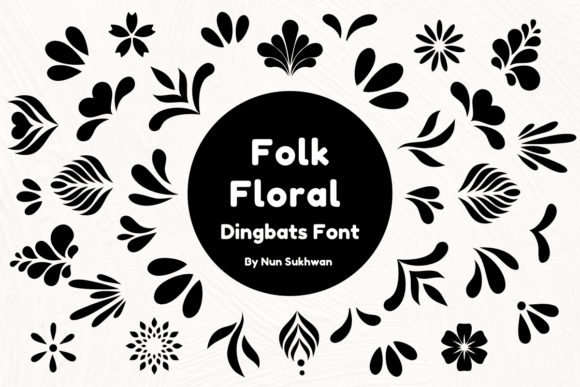
At its core, a dingbat font is a typeface where the keys on your keyboard map to symbols or illustrations rather than letters. Folk Floral Dingbats takes this concept and elevates it by focusing specifically on the rich visual language of folk art and botanical illustration. You will find stylized leaves, blooming petals, and ornate floral clusters that evoke the feeling of woodblock prints or intricate embroidery.
The defining characteristic of this collection is the silhouette style. Each element is designed with a bold, clean outline. This is crucial for versatility. Unlike photographic textures or complex watercolor illustrations, these vector-based shapes are infinitely scalable. They remain crisp whether you are designing a tiny favicon for a website or a massive backdrop for a trade show booth. The aesthetic is distinctly "hand-drawn," yet the execution is precise, ensuring that your final output looks professional rather than messy.
Solving the "Blank Canvas" Syndrome
One of the most common challenges designers face is the "blank canvas" syndrome, particularly when a project calls for a specific mood. If you are working on a project that requires a "rustic," "bohemian," "vintage," or "organic" vibe, standard geometric icons often feel too cold or corporate. Conversely, commissioning custom hand-drawn illustrations for every small project is rarely financially viable.
Folk Floral Dingbats addresses this gap by providing an instant source of illustration. It serves as a creative catalyst. Instead of starting from zero, you have a library of pre-designed motifs that carry the emotional weight of traditional craftsmanship. This allows you to quickly establish a visual direction, helping you move past the initial hesitation and into the creative flow of composition.
Practical Applications and Implementation
The versatility of Folk Floral Dingbats lies in how the elements can be manipulated. Because they function as a font, they can be typed out and treated just like text. This means you can easily adjust their size, color, and spacing using standard typography tools in software like Adobe Illustrator, Photoshop, Canva, or even Microsoft Word.
Here are several practical ways to implement these assets into your workflow:
Creating Seamless Patterns
One of the most powerful uses for these motifs is pattern-making. Because the shapes are distinct and stylized, they tile beautifully. You can create repeating backgrounds for packaging, textile design, or website headers. By combining different elements—perhaps alternating a large bloom with a smaller leaf cluster—you can build complex, rich patterns that look like custom fabric prints. This is particularly useful for designers working in the stationery or textile industries.
Logo Design and Branding
For artisanal brands, such as organic skincare lines, local bakeries, or boutique farms, the brand identity needs to convey authenticity. Folk Floral Dingbats provides the perfect raw material for logo construction. You might use a single, bold floral element as an emblem or frame a brand name with symmetrical botanical borders. The clean silhouettes ensure that the logo reproduces well in single-color printing or embossing, which is often a requirement for high-end packaging.
Wedding and Event Stationery
The wedding industry relies heavily on themes of romance and nature. These dingbats are ideal for creating suite cohesion. You can use them to design watermarks on invitation cards, decorative dividers between text blocks on menus, or intricate borders on envelope liners. The "folk" aesthetic fits perfectly with barn weddings, garden parties, or vintage-themed events.
Digital Content and Social Media
In the fast-paced world of social media, visual distinctiveness is key. Folk Floral Dingbats can be used to create unique Instagram highlights, story backgrounds, or Pinterest graphics. By using these vector elements, you can maintain a consistent aesthetic that stands out against the generic templates often used by competitors.
Tailoring the Approach for Different Users
Different creative professionals will find distinct value in Folk Floral Dingbats depending on their specific needs.
The Graphic Designer: For the professional designer, this font is a time-saving asset. It reduces the need to sketch basic botanical elements from scratch. The designer can focus on layout and composition, using the dingbats as high-quality building blocks. They might convert the font to outlines (vector paths) to customize the nodes, stretching or warping the shapes to fit a unique container.
The DIY Enthusiast: For those without formal design training, the appeal is accessibility. You do not need a stylus or a tablet to achieve a hand-drawn look. By typing a few characters and changing the font color, a user can transform a plain digital invitation or a printable art piece into something that looks bespoke and artistic. It democratizes design, allowing anyone to add "hand-crafted" flair to their personal projects.
The Scrapbooker and Crafter: Physical crafters can print these elements on cardstock to create die-cuts, tags, and embellishments. The bold lines of the Folk Floral Dingbats make them easy to cut out by hand, providing a steady supply of consistent decorative accents for physical albums and cards.
Design Considerations and Best Practices
To get the most out of Folk Floral Dingbats, it is helpful to keep a few design principles in mind.
- Layering and Transparency: Don't be afraid to overlap these elements. Because they are often solid silhouettes, they work wonderfully when layered with varying degrees of transparency. This creates depth and a sense of intricate weaving, mimicking the look of folk art textiles.
- Color Palettes: While these shapes look striking in black and white, they truly come alive with considered color choices. Earthy tones—terracotta, sage green, mustard yellow, and deep navy—complement the folk aesthetic. However, using modern pastels can update the look for a contemporary baby shower or spring branding project.
- Negative Space: Folk art is often characterized by how shapes interact with the background. Ensure you leave enough negative space around your floral clusters so they don't overwhelm the viewer. Let the shapes breathe.
- Mixing and Matching: Folk Floral Dingbats pairs exceptionally well with serif fonts that have a bit of character, or clean sans-serifs for a modern contrast. Use the floral elements as drop caps or bullet points to integrate them seamlessly into your text layouts.
The Outcome: Warmth and Heritage
Ultimately, the goal of using Folk Floral Dingbats is to evoke an emotional response. In a digital landscape that can often feel sterile and mass-produced, these designs offer a connection to the past and to the human hand. They bring a warmth that is difficult to replicate with standard digital geometry.
By incorporating these elements, you are not just decorating a page; you are telling a story of nature and tradition. Whether you are creating a brand identity for a small business or designing a personal gift, Folk Floral Dingbats provides the tools to make that story beautiful, accessible, and enduring. It proves that with the right resources, you can bring the soul of folk art into the modern age, one keystroke at a time.