Unlocking Visual Storytelling: The Power of the Family Story Dingbats Font in Modern Design
In the rapidly evolving landscape of digital design and content creation, the ability to convey complex emotions and narratives quickly is a premium skill. While high-resolution photography and vector illustrations have long dominated the scene, a new trend is emerging that bridges the gap between professional typography and personal illustration: the Family Story Dingbats Font. This unique typeface is not merely a set of characters; it is a comprehensive visual language designed to capture the essence of human connection, growth, and love.
For professionals, entrepreneurs, and creative enthusiasts, understanding the utility of the Family Story font is essential. It represents a shift toward more authentic, hand-drawn aesthetics in a market saturated with sterile, corporate imagery. This article explores the technical nature of this asset, its strategic application in various industries, and why it has become a vital tool for those looking to add a layer of warmth to their creative canvas.
What Exactly is the Family Story Typeface?
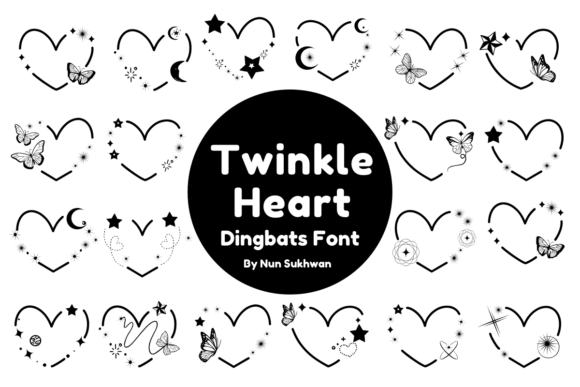
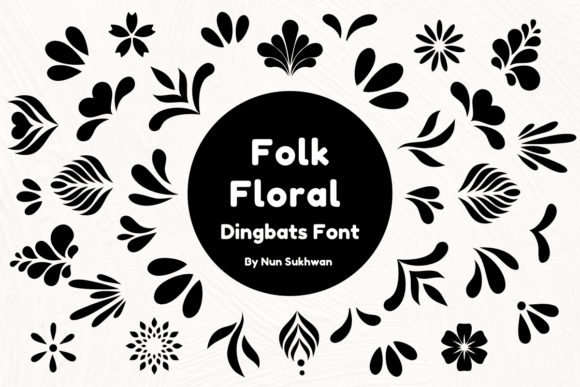
At its core, the Family Story typeface challenges the traditional definition of a font. Unlike standard typefaces such as Helvetica or Times New Roman, which provide alphanumeric characters for communication, Family Story is a collection of "dingbats." In typography, a dingbat is a glyph that is not a letter or numeral—a symbol, ornament, or pictograph. However, the Family Story Dingbats collection elevates this concept into a full-fledged illustration library.
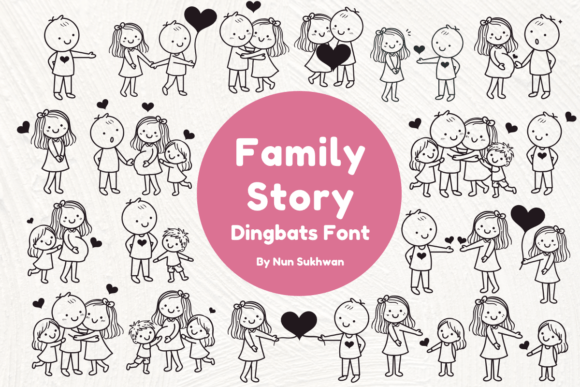
When a user installs the Family Story font and types a specific key on their keyboard, they do not get a letter "A" or "B." Instead, they output a meticulously crafted, hand-drawn illustration. These illustrations feature a clean, doodle-style aesthetic that is instantly recognizable and emotionally resonant. The collection is specifically curated to represent life’s milestones, featuring adorable stick-figure families, expectant parents, playful children, and sweet romantic gestures. It provides a cohesive visual language that speaks directly to the viewer's heart, bypassing the need for complex translation.
The Rise of Authenticity: Industry Trends and Market Relevance
To understand why the Family Story font is gaining traction, one must look at broader industry trends. We are currently witnessing a massive cultural and marketing shift away from polished, overly staged stock photography. Consumers and audiences are gravitating toward authenticity. In the digital marketing sphere, this is often referred to as the "unfiltered" movement, where raw, genuine content outperforms highly produced material.
The Family Story typeface fits perfectly into this paradigm. The hand-drawn nature of the icons suggests a human touch—a warmth that digital precision often lacks. For marketers and brand strategists, this is a critical distinction. In an era where artificial intelligence can generate photorealistic images in seconds, the value of human-centric, imperfect, and charming illustration has skyrocketed. The Family Story font allows brands to signal empathy and approachability, traits that are increasingly important to modern consumers.
Furthermore, the "maker economy" has exploded in recent years. Small business owners, Etsy shop creators, and independent stationery designers are constantly seeking tools that allow them to compete with larger entities without incurring massive overhead costs. Commissioning custom illustrations for a line of baby shower invitations or wedding journals can be prohibitively expensive. The Family Story font democratizes this design process, offering a high-end illustrative aesthetic at a fraction of the cost.
Practical Applications for Professionals and Creators
The versatility of the Family Story Dingbats extends across various professional workflows. It is not limited to personal hobbyist projects; rather, it serves as a functional design asset for complex commercial and personal endeavors.
1. Personalized Stationery and Milestone Cards
For graphic designers specializing in stationery, the Family Story font is an indispensable asset. It simplifies the creation of custom family trees, personalized scrapbooks, and baby announcement cards. Instead of searching through stock image databases for generic vector art, a designer can simply type a character to access a perfectly styled illustration that matches the rest of the icon set. This ensures visual consistency—a key component of professional design—across the entire project.
2. Educational and Infographic Design
In the realm of educational content and infographics, clarity is paramount. The stick-figure aesthetic of the Family Story typeface makes it ideal for explaining concepts related to sociology, family dynamics, or health without the distraction of detailed photography. When paired with clean, modern sans-serifs, these icons create a professional "infographic" look that remains deeply personal. Freelancers creating presentations for clients in the healthcare or social work sectors will find these illustrations particularly useful for conveying sensitive topics with a soft, approachable tone.
3. Digital Content and Social Media
Content creators on platforms like Instagram, Pinterest, and TikTok are constantly in need of fresh visual assets. The Family Story font allows for the rapid creation of engaging posts. A social media manager for a parenting blog or a family law firm can use these dingbats to create quick, eye-catching graphics that stop the scroll. The ability to pair these illustrations with soft handwritten scripts allows for a seamless integration into modern digital aesthetics, such as the "clean girl" or "cozy minimalist" trends.
Changing Workflows and Design Expectations
The introduction of assets like the Family Story font signals a change in creative workflows. Historically, adding illustration to a project required a multi-step process: concepting, sketching, digitizing, and coloring. Today, the expectation is speed and efficiency without sacrificing quality.
The Family Story typeface meets this expectation by acting as a bridge between typography and illustration. It allows designers to "type" their visuals, integrating illustrations into text boxes just as they would with standard copy. This streamlines the design process significantly. For a busy entrepreneur launching a product, the ability to generate high-quality, thematic imagery instantly is a competitive advantage.
Moreover, the aesthetic preferences of the modern consumer have evolved. There is a growing appreciation for "imperfect" art—line drawings that show the movement of the hand rather than the rigidity of a computer algorithm. The Family Story icons, with their charming, doodle-style lines, tap into this preference. They evoke a sense of nostalgia and comfort, making them particularly effective for lifestyle brands aiming to build emotional connections with their audience.
Strategic Integration: How to Use Family Story Effectively
For professionals looking to integrate the Family Story Dingbats into their work, a strategic approach is necessary to maintain a professional edge. Simply using the icons without context can lead to cluttered designs.
First, consider the color palette. While the default black outlines are classic, the true magic of these vector-based dingbats lies in their scalability and color adaptability. Changing the color of the font to match a client’s brand guidelines or a specific mood board can transform the look of the project entirely.
Second, pairing is key. As noted, the Family Story typeface works best when contrasted with clean typography. Using a bold, geometric sans-serif for headers and a light, airy script for sub-headers creates a hierarchy that allows the illustrations to serve as accents rather than overwhelming the page. This balance ensures that the design remains legible and professional.
Finally, use the font to enhance the narrative. Whether you are documenting your own family’s journey or creating a marketing campaign for a client, every icon should serve a purpose. Use the "expectant parents" icon to highlight a specific section of a newsletter, or the "playful children" dingbat to add a touch of whimsy to a brochure. By treating the Family Story illustrations as narrative tools rather than just decorations, creators can elevate the emotional impact of their work.
Conclusion
The Family Story Dingbats Font is more than just a novelty; it is a reflection of the current desire for human connection in digital spaces. It empowers marketers, freelancers, and hobbyists to tell stories of love and growth with the click of a key. By combining the efficiency of digital typography with the warmth of hand-drawn illustration, Family Story provides a solution that is both practical and deeply resonant. As the creative industry continues to value authenticity and emotional intelligence, assets like this will become indispensable in the designer's toolkit.